How to Stop Mold Growth Caused by Water Leakage

Stop Mold Growth Caused by Water Leakage

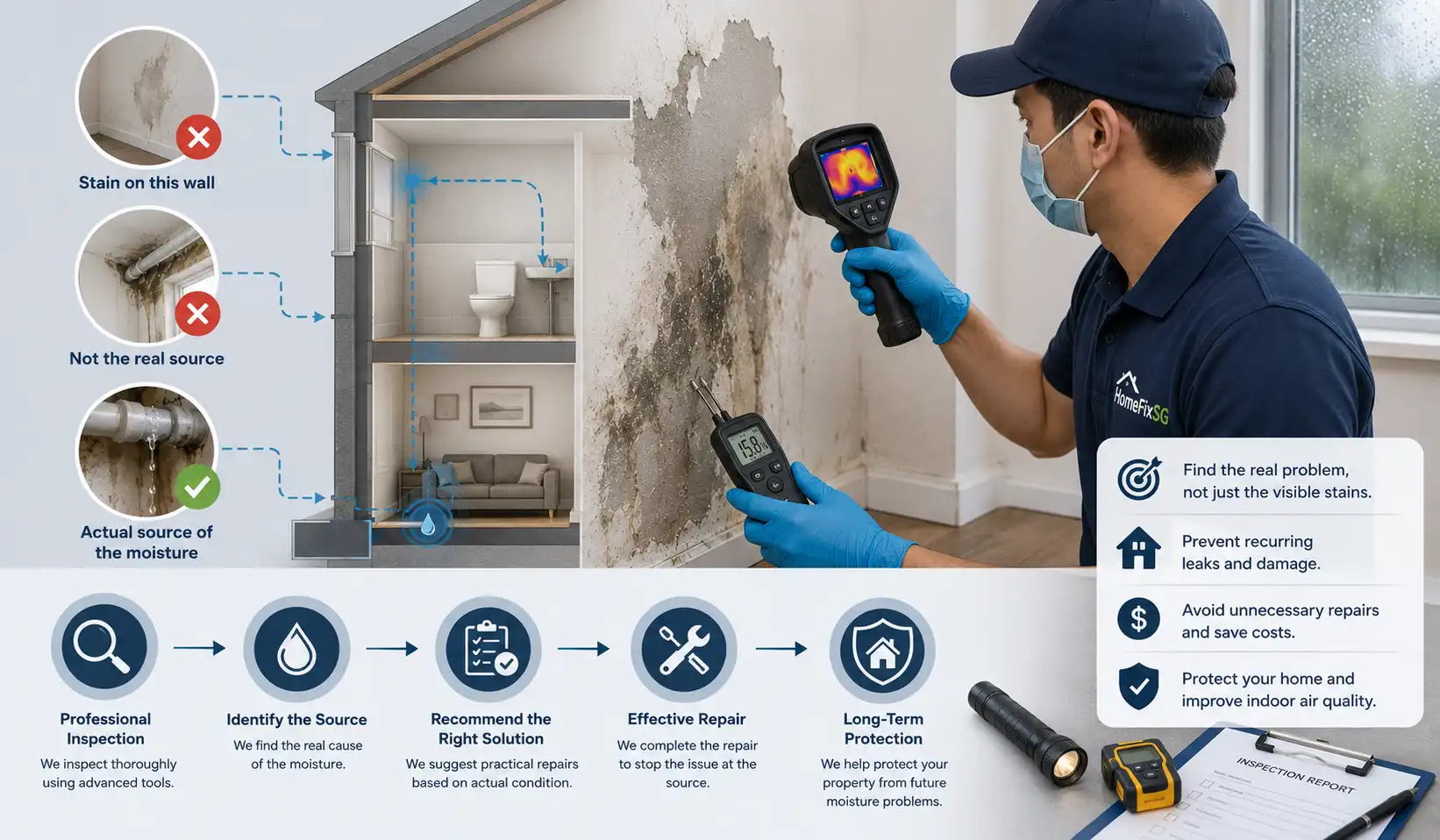
The best way to stop mold growth caused by water leakage is to identify and repair the source of the moisture before removing the mold. Simply cleaning visible mold is only a temporary fix.

At HomeFixSG, we inspect the affected area, identify the root cause, and recommend practical waterproofing or leak repair solutions to help prevent mold from returning.

Mold Is a Warning Sign, Not the Real Problem

Finding mold on your walls or ceilings is often a sign of a hidden moisture problem rather than the actual issue itself. In many homes across Singapore, mold growth caused by water leakage begins when moisture becomes trapped behind walls, beneath flooring, or inside ceilings. Simply cleaning the visible mold may improve the appearance temporarily, but it won't stop the problem from returning if the source of the leak remains untreated.

At HomeFixSG, we believe the first step is identifying the root cause of the moisture. Whether it's hidden water leakage, wall seepage, damaged waterproofing, or a leaking pipe, repairing the source helps prevent recurring mold, protects your property from further damage, and provides a longer-lasting solution.

Why Does Mold Grow After Water Leakage?

Why Does Mold Grow After Water Leakage

Mold grows when moisture remains trapped for a long time. After water leakage, damp surfaces such as walls, ceilings, flooring, and grout create the perfect environment for mold spores to grow and spread. Because many leaks develop behind finished surfaces, the damage often goes unnoticed until visible mold, peeling paint, or a musty smell appears.

Several common problems can lead to recurring moisture and mould growth, including:

  • Hidden plumbing leaks
  • Wall seepage
  • Failed waterproofing systems
  • Cracked grout or worn sealants
  • Roof leaks after heavy rain
  • Poor ventilation in damp areas

Cleaning the mold alone will not solve the problem. The source of the moisture must be identified and repaired first to prevent it from returning. If water is entering through damaged walls, professional Wall Seepage Repair can help stop moisture from spreading further. In situations where waterproofing has deteriorated, complete Waterproofing Singapore solutions may also be recommended to protect your property from future water intrusion.

Common Signs of Mold Caused by Water Leakage

Mold often develops slowly, which means the early warning signs can be easy to miss. Recognising these symptoms early can help prevent more extensive property damage and costly repairs.

🟢 Black or Green Spots on Walls

Small black or green patches are one of the first visible signs of mold from water leakage. These spots often appear on painted walls, ceilings, tile grout, or around damp corners where moisture remains trapped.

🟢 A Persistent Musty Smell

If your home has a damp or musty odour that doesn't go away, hidden moisture may already be encouraging mould growth behind walls, ceilings, or flooring.

🟢 Peeling Paint or Bubbling Walls

Paint that begins to bubble, peel, or crack may indicate that moisture has penetrated the surface. This often happens when hidden water leakage remains untreated for an extended period.

🟢 Damp Walls That Never Dry

Walls that stay damp long after rain or everyday use may be affected by wall seepage or trapped moisture. In these situations, professional Wall Seepage Repair Singapore can help eliminate the source before the damage becomes more severe.

🟢 Ceiling Stains or Water Marks

Brown stains, peeling paint, or damp patches on the ceiling often indicate moisture travelling from another part of the property. If the damage continues to spread, Ceiling Leakage Repair Singapore may be required to resolve the underlying issue.

🟢 Mold Returning After Cleaning

If mould keeps coming back after cleaning, the underlying moisture problem has likely not been resolved. In many cases, repairing the source of the water leakage and restoring proper Waterproofing Singapore is the only long-term solution.

Is Mold Caused by Water Leakage Dangerous?

Is Mold Caused by Water Leakage Dangerous

Yes, it can be. While not every type of mold poses the same level of risk, long-term exposure to mold caused by water leakage may affect both your property and indoor air quality. The longer moisture remains untreated, the greater the chance of mould spreading to nearby walls, ceilings, flooring, and other building materials.

For many people, mould exposure may contribute to:

  • Allergic reactions
  • Sneezing and nasal congestion
  • Eye or skin irritation
  • Persistent musty odours
  • Poor indoor air quality

Properties with ongoing moisture problems may also experience peeling paint, damaged plaster, weakened building materials, and more expensive repairs over time.

Rather than repeatedly cleaning visible mould, it's important to identify where the moisture is coming from. If water is entering through damaged walls, professional Wall Seepage Repair can help eliminate the source before mould continues to spread.

Where waterproofing systems have failed, complete Waterproofing Singapore solutions may also be recommended to help protect your property from future moisture damage.

How to Stop Mold Growth Caused by Water Leakage

Removing visible mold is only part of the solution. To stop mold growth caused by water leakage permanently, you must eliminate the source of the moisture first. Otherwise, mold is likely to return even after repeated cleaning.

Step 1: Identify the Source of the Water Leakage

The first step is determining where the moisture is coming from. Water may enter through damaged waterproofing, leaking pipes, cracked grout, roof leaks, or wall seepage. Identifying the exact source helps prevent unnecessary repairs and ensures the problem is resolved correctly.

Step 2: Repair the Underlying Problem

Once the source has been identified, the damaged area should be repaired before removing the mould. Depending on the inspection findings, this may involve Wall Seepage Repair, Water Leakage Repair Singapore, or other targeted repair solutions. Addressing the root cause prevents moisture from continuing to spread.

Step 3: Restore Waterproof Protection

If the existing waterproofing system has deteriorated, repairing the leak alone may not provide long-term protection. Professional Waterproofing Singapore helps create a protective barrier that reduces the risk of future water intrusion and recurring moisture problems.

For bathrooms where waterproofing failure is limited to specific wet areas, Bathroom Waterproofing Singapore or Shower Waterproofing Singapore may also be recommended after inspection.

Step 4: Remove Existing Mold Safely

After the moisture problem has been resolved, the affected surfaces should be cleaned using appropriate mould removal methods. Cleaning without repairing the leak only removes the visible symptoms and does not stop future mold growth.

Step 5: Prevent Future Moisture Problems

Regular property inspections, prompt leak repairs, proper ventilation, and maintaining waterproofed areas can significantly reduce the risk of mold returning. Addressing small moisture problems early is usually far less expensive than repairing extensive water damage later.

Why Professional Inspection Matters

Why Professional Inspection Matters

Water doesn't always travel in a straight line. A stain on one wall may actually originate from another part of the property. That's why a professional inspection is essential before deciding on the most appropriate repair solution. At HomeFixSG, we identify the source of the moisture first, then recommend practical repairs based on the actual condition of your property rather than applying a one-size-fits-all approach.

How to Prevent Mold from Returning
How to Prevent Mold from Returning

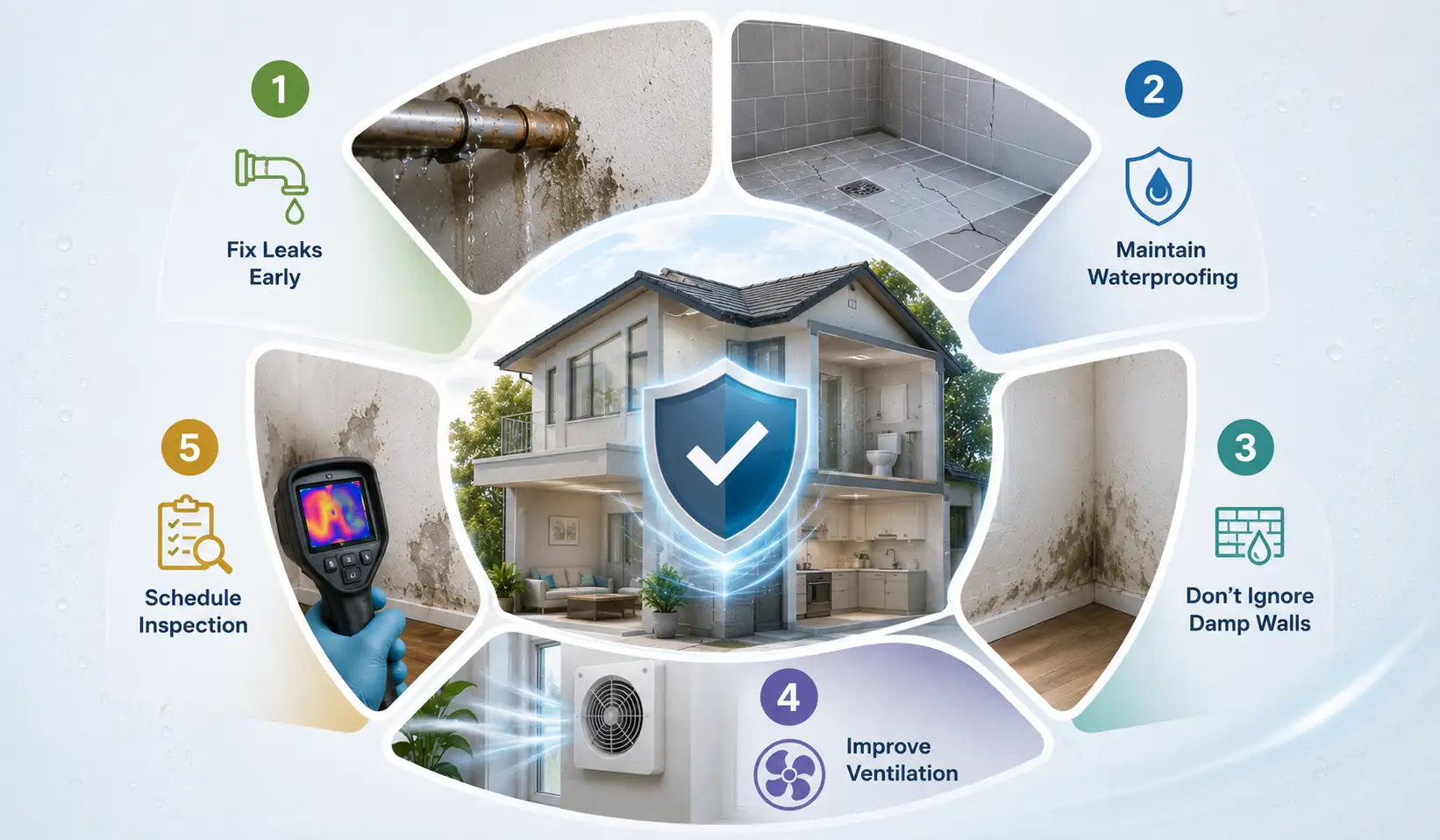
Once the source of the moisture has been repaired, taking a few preventive steps can help reduce the risk of mould returning. Regular maintenance and early action are often the best ways to protect your property from long-term water damage.

Fix Water Leaks as Early as Possible

Even a small leak can create enough moisture for mold to develop over time. Addressing water leakage early helps prevent damage from spreading to walls, ceilings, flooring, and nearby rooms.

Keep Waterproofed Areas in Good Condition

Waterproofing systems naturally wear over time. If you notice cracked grout, loose tiles, peeling paint, or recurring damp patches, it's worth having the affected area inspected before the damage becomes more serious. Professional Waterproofing Singapore can help restore long-term protection where existing waterproofing has failed.

Don't Ignore Damp Walls

Walls that remain damp after rainfall or daily use may indicate hidden moisture inside the structure. Repairing wall seepage early helps prevent mold, peeling paint, and further structural damage. Our Wall Seepage Repair service is designed to identify and resolve these problems before they become more expensive to repair.

Improve Ventilation

Bathrooms, kitchens, and laundry areas naturally produce more moisture than other parts of the home. Good ventilation helps reduce humidity and allows damp surfaces to dry more quickly, making it harder for mould to grow.

Schedule an Inspection if Mold Keeps Returning

If mould continues to return after cleaning, there is usually an underlying moisture problem that hasn't been resolved. A professional inspection can identify hidden leaks or waterproofing failures before they lead to more extensive property damage.

Why Choose HomeFixSG?

Why Choose HomeFixSG

Choosing the right contractor is just as important as repairing the water leak itself. At HomeFixSG, we focus on identifying the root cause of the problem before recommending any repair work. Our goal is to provide practical, long-lasting solutions that help protect your property from recurring moisture damage and mold growth.

👨‍🔧 Experienced Waterproofing Professionals

With over 10 years of experience, our team specialises in waterproofing, leak detection, and moisture-related repairs for residential and commercial properties across Singapore.

🔍 Thorough Property Inspection

Every project begins with a detailed inspection to identify the actual source of the moisture. We recommend repair solutions based on the condition of your property rather than applying a one-size-fits-all approach.

🛠️ Practical, Long-Term Solutions

Not every moisture problem requires complete waterproofing. Where a targeted repair is sufficient, we'll recommend the most practical solution to resolve the issue while helping reduce unnecessary repair costs.

💬 Clear Recommendations & Transparent Pricing

Before any work begins, we'll explain our findings, discuss the available repair options, and provide a clear, no-obligation quotation so you know exactly what to expect.

⚡ Prompt Response Across Singapore

Whether you need a scheduled inspection or urgent repair assistance, our team aims to respond promptly and minimize disruption to your home or business whenever scheduling allows.

Frequently Asked Questions

What causes mold growth after water leakage?

Mold growth caused by water leakage usually occurs when moisture remains trapped behind walls, ceilings, flooring, or other building materials. Hidden leaks, failed waterproofing, poor ventilation, and wall seepage can all create damp conditions where mold spores begin to grow. The source of the moisture should always be repaired before removing the mould

Can mold come back after cleaning?

Yes. Cleaning visible mould only removes the surface growth. If the underlying water leakage or moisture problem has not been repaired, mould is likely to return. Long-term prevention starts by identifying and fixing the source of the moisture.

How do I know if mold is caused by a water leak or humidity?

Mould caused by water leakage often appears together with damp patches, peeling paint, bubbling walls, ceiling stains, or recurring moisture in the same location. Humidity-related mold is usually more widespread and develops in poorly ventilated spaces. A professional inspection can help identify the actual cause.

Is mold caused by water leakage dangerous?

Mould may affect indoor air quality and can trigger allergies or irritation for some people, especially when exposure continues over time. It can also damage paint, plaster, timber, and other building materials if the moisture problem remains unresolved.

How can I stop mold from growing permanently?

The most effective solution is to repair the source of the moisture before removing the mould. Depending on the cause, this may involve Wall Seepage Repair, Water Leakage Repair Singapore, or Waterproofing Singapore. Once the leak has been repaired, keeping the area dry and well ventilated helps reduce the risk of mold returning.

Can hidden water leakage cause mold behind walls?

Yes. Hidden leaks inside walls, ceilings, or floors can keep building materials damp for long periods without obvious signs. Over time, this trapped moisture may encourage mold growth behind finished surfaces. Professional leak detection helps locate the source without unnecessary hacking in many cases.

Do I need waterproofing if mold keeps returning?

Possibly. If mould repeatedly returns after cleaning, damaged waterproofing or ongoing moisture intrusion may be the underlying cause. After inspection, Waterproofing Singapore may be recommended where waterproofing failure is identified.

What are the first signs of hidden moisture inside a property?

Common warning signs include a musty smell, peeling paint, bubbling walls, ceiling stains, damp patches, loose tiles, persistent condensation, and recurring mold. Acting early can help prevent more extensive property damage.

Can mold damage my home if I ignore it?

Yes. While mold itself is a visible symptom, the underlying moisture can continue damaging walls, ceilings, flooring, paint finishes, and structural materials. Repairing the source of the leak early usually helps prevent more costly repairs later.

Can mold grow even if I can't see a water leak?

Yes. Many moisture problems develop behind walls, beneath flooring, or above ceilings where they are not immediately visible. Hidden leaks, wall seepage, or deteriorated waterproofing systems can all create conditions that allow mold to grow.

How long does it take for mold to grow after water leakage?

Mould can begin developing within a few days if moisture remains trapped and the area stays damp. The speed depends on the amount of moisture, ventilation, temperature, and the materials affected. Addressing leaks as soon as possible helps reduce the risk of mould growth.

Who should I contact for mold caused by water leakage in Singapore?

If mold is being caused by ongoing moisture, it's important to identify and repair the source before removing the mold. HomeFixSG provides inspections to identify the cause of water leakage, recommends suitable repair solutions, and helps prevent recurring moisture problems through professional waterproofing and leak repair services.

About the Author

HomeFixSG Editorial Team

The HomeFixSG Editorial Team creates practical, research-based content to help homeowners and businesses across Singapore understand common property maintenance issues, including water leakage, waterproofing, wall seepage, and moisture damage. Every article is reviewed for accuracy and written to provide clear, actionable guidance based on industry best practices and real customer concerns.

Our goal is to help property owners make informed decisions before small maintenance issues become costly repairs.

Need Help Stopping Mold Growth?

If you're dealing with recurring mold, damp walls, or signs of water leakage, don't ignore the problem. The longer moisture remains untreated, the greater the risk of property damage and recurring mold.

At HomeFixSG, we inspect the affected area, identify the root cause, and recommend the most suitable repair solution based on your property's condition. Whether the issue involves Wall Seepage Repair, Waterproofing Singapore, or another moisture-related service, our goal is to provide a practical, long-term solution not just a temporary fix.

Contact HomeFixSG today to schedule a professional inspection and request your free, no-obligation quotation anywhere in Singapore.