

Why Are My Walls Damp? 7 Common Causes of Wall Seepage Repair Singapore
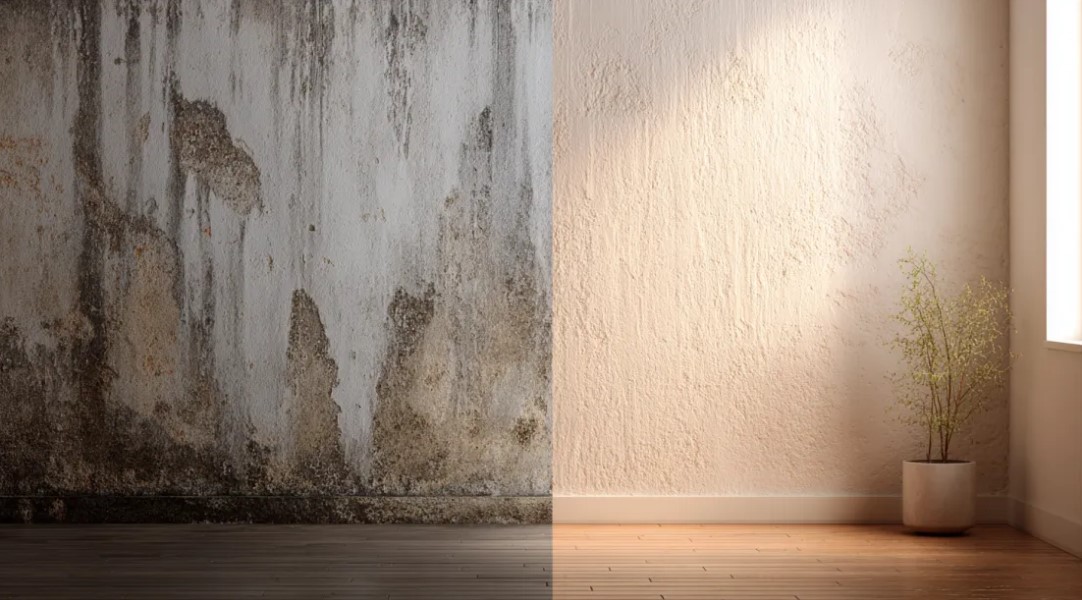
Have you noticed water leaking through wall Singapore, peeling paint, or a damp patch that never seems to dry? These are some of the earliest signs that you may need wall seepage repair in Singapore before the problem becomes more serious.
In Singapore's hot, humid climate and frequent heavy rain, wall seepage is a common issue for HDB flats, condominiums, and landed properties. What starts as a small damp patch can eventually lead to mold growth, damaged paint, weakened plaster, unpleasant odours, and even structural deterioration if left untreated.
Many homeowners assume repainting the wall will solve the problem. Unfortunately, fresh paint only hides the symptoms. Unless the source of the moisture is identified and repaired, the dampness will return.
In this guide, we'll explain the most common causes of wall seepage, how professionals diagnose the issue, when you should call an expert, and the best long-term repair solutions. If you're searching for reliable wall seepage repair in Singapore, this guide will help you understand exactly what is happening inside your walls and how to fix it permanently.
What Is Wall Seepage Repair Singapore?
Wall seepage happens when water penetrates through external or internal walls and becomes trapped inside the wall structure. Instead of flowing away, moisture slowly spreads through concrete, brick, plaster, or cement before appearing on your interior walls.
Unlike a sudden pipe burst, seepage often develops gradually. The first signs may seem harmless, such as a small stain or bubbling paint. Over time, however, trapped moisture can cause extensive damage to walls, ceilings, flooring, electrical systems, and furniture.
Professional wall seepage repair Singapore focuses on finding the root cause rather than simply covering up visible damage. Experienced specialists use moisture detection tools and waterproofing techniques to stop water infiltration and restore the affected surfaces.
If the dampness originates from your roof or upper floor, it may also require Roof Waterproofing eliminate the source of the leak before repairing the wall.
Why Are My Walls Damp in Singapore?
Singapore's tropical climate creates the perfect conditions for moisture-related problems.
Several local factors contribute to water seepage wall Singapore, including:
- Frequent heavy rainfall throughout the year
- High humidity levels that slow drying
- Ageing waterproofing systems
- Hairline cracks in concrete walls
- Poor exterior maintenance
- Water intrusion around windows and balconies
- Plumbing leaks hidden inside walls
Properties in Pasir Ris, Bedok, Tampines, Simei, and other parts of East Singapore are particularly vulnerable because many buildings have been exposed to years of rain, heat, and humidity.
If you notice damp walls after every storm, don't wait until the damage spreads. Early wall seepage repair Pasir Ris can prevent much larger repair costs later.
1. Water Leaking Through Wall Singapore Due to Exterior Wall Cracks
One of the most common reasons homeowners need wall leakage repair Singapore is cracked exterior walls.
Concrete naturally expands during hot weather and contracts when temperatures cool. Over time, this movement creates tiny cracks that allow rainwater to seep inside.
Even hairline cracks that seem insignificant can become entry points for moisture.
- Wet patches after rainfall
- Interior paint bubbling
- Cracked plaster
- Damp walls near windows
- Water stains that continue growing
- Crack inspection
- Surface preparation
- Crack injection
- Exterior waterproof coating
- Protective sealant application
Simply repainting over these cracks will not stop the water from entering.
2. Why Are My Walls Damp in Singapore? Failed Waterproofing Membranes
Many buildings rely on waterproof membranes to prevent water penetration.
Unfortunately, these protective layers do not last forever.
- UV exposure
- Heavy rainfall
- Temperature changes
- Poor workmanship
- Natural wear over time
Once the membrane fails, rainwater can slowly penetrate into the wall structure.
- Damp patch on wall Singapore
- Paint blistering
- Persistent moisture
- White powder deposits (efflorescence)
- Peeling wallpaper
In these situations, professional wall waterproofing Singapore is usually required. A qualified waterproofing contractor Singapore can inspect the affected area, remove damaged materials, and install a new waterproofing system designed for Singapore's climate.
3. Hidden Plumbing Leaks Causing Damp Wall Repair Singapore
Not all wall seepage comes from rain.
Sometimes the real problem is a leaking water pipe hidden inside the wall.
Small plumbing leaks often go unnoticed for months because the water slowly spreads through the surrounding concrete.
- Moisture that appears even during dry weather
- Constant dampness
- Higher water bills
- Soft wall surfaces
- Musty smell indoors
Unlike rainwater intrusion, plumbing leaks usually continue throughout the year.
Professional technicians use moisture meters and thermal imaging equipment to locate hidden leaks without unnecessary wall demolition.
After repairing the pipe, the damaged wall can undergo proper damp wall repair Singapore to restore both appearance and structural integrity.
4. Paint Peeling Due to Wall Seepage Singapore
Many homeowners believe peeling paint is only a cosmetic problem.
In reality, it's often one of the earliest indicators of hidden moisture.
When water becomes trapped behind painted surfaces, pressure builds until the paint loses adhesion.
- Paint peeling due to wall seepage Singapore
- Bubbling paint wall leakage Singapore
- Flaking paint
- Discoloured patches
- Soft plaster
- Powdery residue
Unfortunately, repainting without repairing the moisture source simply traps water inside the wall. The new paint will eventually bubble and peel again.
A proper inspection will determine whether the issue requires water leakage repair Singapore, exterior sealing, or complete wall seepage repair Singapore.
Why You Should Fix Wall Seepage Early
Ignoring a damp wall can lead to much bigger problems over time, including:
- More expensive repairs
- Structural deterioration
- Mould growth that affects indoor air quality
- Damage to furniture and flooring
- Electrical safety risks if moisture reaches wiring
- Reduced property value
Addressing the issue early is almost always more affordable than waiting until extensive repairs are needed.
What Causes Wall Seepage in Singapore?
Wall seepage occurs when water finds its way into your walls through cracks, failed waterproofing systems, leaking pipes, or poorly sealed joints. Instead of draining away, moisture becomes trapped inside the wall structure and gradually spreads through the concrete, brick, or plaster. Over time, this hidden moisture leads to visible problems such as damp patches, peeling paint, mould growth, and musty odours.
In Singapore, wall seepage is a common issue because of the country's tropical climate, frequent heavy rainfall, and high humidity. Homes in Pasir Ris, Bedok, Tampines, Simei, and other parts of East Singapore are regularly exposed to intense rain and moisture, which can weaken waterproofing systems over time. Older HDB flats, condominiums, and landed properties are particularly vulnerable if waterproofing has not been maintained or repaired for many years.
The good news is that most wall seepage problems can be fixed permanently once the root cause is identified. While repainting may temporarily hide stains, it does not stop water from entering the wall. Professional wall seepage repair Singapore focuses on locating the source of the leak, repairing the damaged area, and applying the right waterproofing solution to prevent the problem from returning.
Below are the seven most common causes of wall seepage in Singapore and how each issue can be repaired before it leads to more serious structural damage.
Exterior Wall Cracks Allow Rainwater to Enter Your Home
One of the most common reasons homeowners need wall seepage repair Singapore is due to cracks in exterior walls. Even small hairline cracks can allow rainwater to penetrate concrete during Singapore's frequent storms. Once moisture enters the wall, it slowly spreads through the concrete before becoming visible inside your home.
You may first notice damp patches, bubbling paint, or discoloured walls, but these are only symptoms. The real problem lies in the damaged exterior wall that no longer prevents water intrusion.
If left untreated, the seepage can spread deeper into the structure and lead to costly repairs.
- Water stains after heavy rain
- Damp interior walls
- Bubbling or peeling paint
- Hairline cracks on exterior walls
- Mould growth around affected areas
Failed Roof Waterproofing Can Cause Water to Travel Down Your Walls
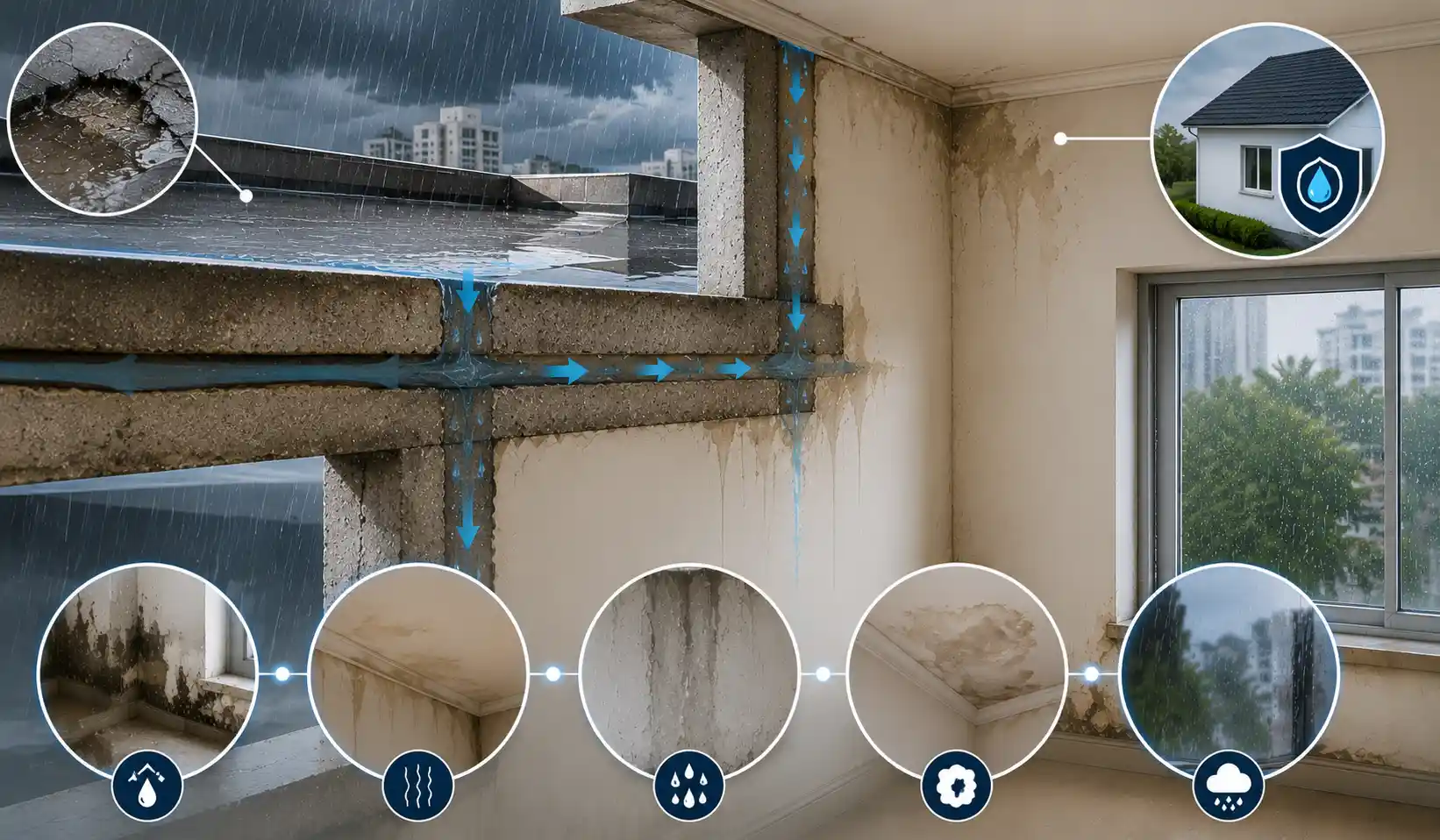
Many homeowners think the wall is leaking when the actual problem starts on the roof. During heavy rain, damaged roofs can allow water to seep into the building structure. Instead of dripping straight down, the water often travels through concrete beams before appearing as damp walls.
If your walls become wet only after rainfall, the issue may be a failing roof waterproofing system rather than the wall itself. In many cases, professional roof waterproofing services are needed to stop the leak at its source.
- Damp walls after rainfall
- Water stains near the ceiling
- Moisture spreading down the wall
- Ceiling discolouration
- Recurring leaks during storms
A professional inspection can identify the source of the leak before recommending repairing a leaking ceiling or wall seepage repair as the most effective solution.
Bathroom Waterproofing Failure Can Lead to Hidden Wall Seepage
Bathrooms are one of the most common sources of hidden water damage in HDB flats and condominiums. Waterproofing membranes installed beneath floor and wall tiles naturally deteriorate over time. Once they fail, water begins leaking behind the tiles and into neighbouring walls.In many cases, repairing the bathroom waterproofing system is the only way to stop water from spreading behind the walls.
If the leak originates around the toilet area, repairing the toilet waterproofing system can stop moisture from spreading into nearby walls.
Because the leak occurs behind finished surfaces, many homeowners don't realise there's a problem until the paint starts peeling outside the bathroom.
- Damp wall behind the bathroom
- Peeling paint outside the toilet
- Loose bathroom tiles
- Persistent moisture
- Musty smells
Ignoring bathroom leaks often allows water damage to spread into adjacent bedrooms or living rooms.
Shower Area Leaks That Spread Behind the Wall
The shower area experiences constant water exposure every day. Over time, cracked grout lines, deteriorated silicone joints, or failed waterproof membranes allow water to penetrate behind the tiles.
Unlike visible plumbing leaks, shower leaks develop slowly and can remain hidden for months.
Eventually, moisture begins appearing on the opposite side of the wall.
- Damp walls beside the shower
- Black mould
- Hollow bathroom tiles
- Loose grout
- Water stains outside the bathroom
Professional waterproofing repairs stop water from spreading further into surrounding rooms.
Damaged Window Sealants and Balcony Waterproofing Failures
Windows, balconies, and planter boxes are constantly exposed to Singapore's tropical weather. Over time, sealants crack, waterproof coatings wear out, and drainage systems become less effective.
During heavy rain, water enters through these weak points before travelling into nearby walls.
This problem is particularly common in high-rise apartments exposed to wind-driven rain.
- Damp walls near windows
- Water stains after storms
- Balcony wall seepage
- Cracked sealants
- Peeling paint
Over time, damaged sealants and worn-out waterproof coatings can allow rainwater to enter through balconies and window joints. In many cases, repairing the balcony waterproofing system is necessary to stop water from reaching nearby walls.
Hidden Plumbing Leaks Inside Walls
Not every wall seepage problem is caused by rain.
Leaking water supply pipes and drainage pipes hidden inside walls are another common cause of persistent dampness.
Because these leaks are concealed, they often go unnoticed until extensive damage has already occurred.
Professional leak detection equipment can identify the exact source without unnecessary wall demolition.
In many cases, repairing the hidden water leak is the first step before any wall repairs can begin.
- Damp walls during dry weather
- Rising water bills
- Constant moisture
- Soft plaster
- Water stains near kitchens or bathrooms
Poor Construction Joints and Aging Building Materials
Older buildings naturally develop movement joints, shrinkage cracks, and weakened waterproof barriers. As concrete expands and contracts over the years, tiny gaps form between walls, floors, and structural joints.
These openings allow moisture to enter the building whenever it rains.
Without proper waterproofing maintenance, the damage gradually becomes worse every year.
Professional waterproofing specialists inspect these vulnerable areas before recommending the most suitable repair method.
Why Homeowners Trust Home Fix SG
At Home Fix SG, we understand that every wall seepage problem has a different cause. That's why we focus on identifying the source of the leak before recommending the right repair solution. Whether the issue involves roof waterproofing, bathroom waterproofing, balcony waterproofing, PU grouting, or hidden plumbing leaks, our goal is to provide reliable, long-lasting repairs for homeowners across Pasir Ris and nearby areas in Singapore.
Frequently Asked question
Can wall seepage be fixed permanently?
Yes. Wall seepage can often be fixed permanently when the root cause is correctly identified and repaired. At Home Fix SG, we carry out a thorough inspection to determine whether the problem is caused by failed waterproofing, roof leaks, hidden plumbing leaks, or bathroom waterproofing issues before recommending the most effective repair solution.
How much does wall seepage repair cost in Singapore?
The cost of wall seepage repair in Singapore depends on the source of the leak, the extent of the damage, and the repair method required. At Home Fix SG, our wall seepage repair services start from S$80. After a professional inspection, we'll identify the root cause and provide a transparent quotation based on the repairs your property actually needs.
What are the first signs of wall seepage?
The most common signs include damp patches, peeling or bubbling paint, black mould, musty odours, and water stains on your walls. If you notice any of these issues, Home Fix SG recommends arranging a professional inspection as early as possible to prevent further damage and costly repairs.
Is wall seepage dangerous if left untreated?
Yes. If left untreated, wall seepage can lead to mould growth, weakened plaster, damaged paint, poor indoor air quality, and even structural deterioration over time. Home Fix SG recommends addressing the problem early to protect both your property and your family's health.
Why choose Home Fix SG for wall seepage repair in Singapore?
Home Fix SG provides professional wall seepage repair, waterproofing, and water leakage repair services for HDB flats, condominiums, and landed properties across Pasir Ris and nearby areas in Singapore. Our team focuses on identifying the root cause of the leak and delivering long-lasting repair solutions rather than temporary fixes.
Need Professional Wall Seepage Repair in Singapore?
Don't let a small damp patch turn into a costly repair. If you've noticed water stains, peeling paint, mould, or moisture on your walls, it's important to fix the problem at its source before it gets worse.
At Home Fix SG, we provide reliable wall seepage repair, waterproofing, and water leakage repair services for HDB flats, condominiums, and landed homes across Pasir Ris and nearby areas in Singapore. Our experienced team identifies the root cause of the leak and recommends the most effective long-term solution, not just a temporary fix.
Contact Home Fix SG today to schedule an inspection and restore your home with confidence.
